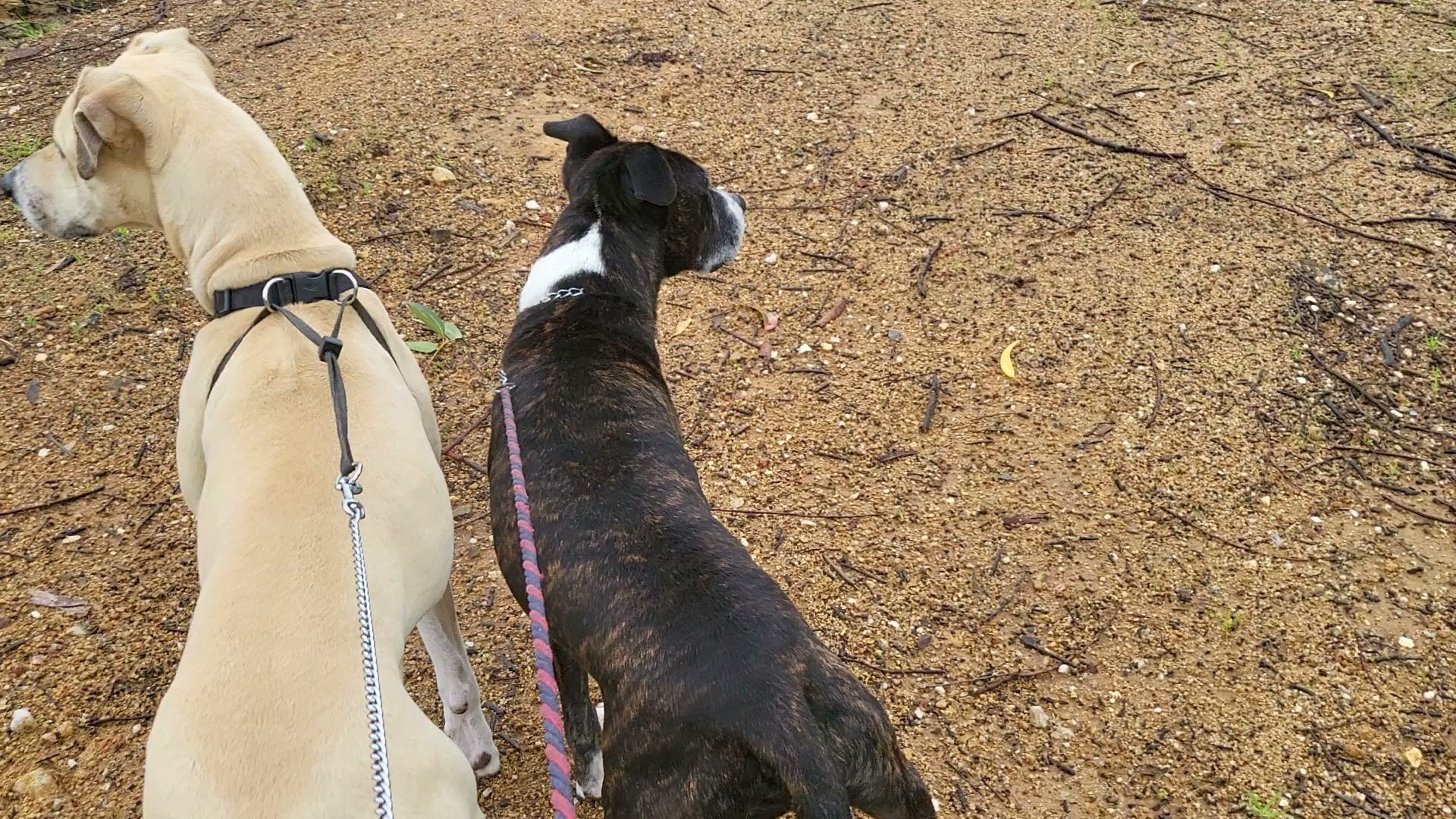
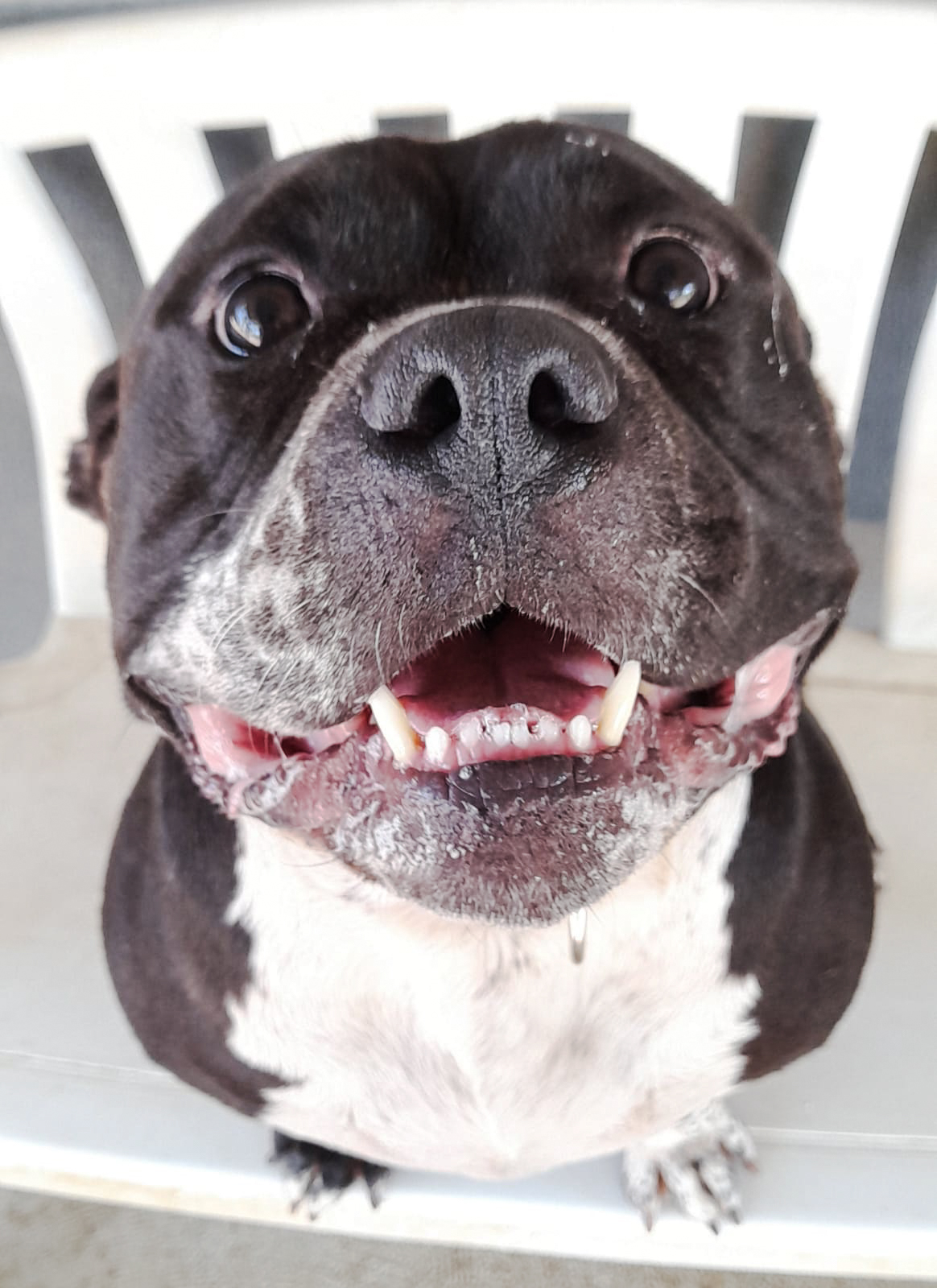
Real dogs. No perfect ending required.
“I love him — but he’s exhausting.” I’ve heard that more times than I can count, usually followed by an apology: “He’s really a good dog.” Most of the time they’re right.
Staffies are enthusiastic dogs. They throw themselves into life. If they don’t know how to slow themselves down, that enthusiasm spills into everything else: pulling on the lead, bouncing off visitors, grabbing toys, barking and struggling to settle. It can feel relentless.
One family that sticks with me was a mum suddenly raising two young children and two Staffies on her own. She didn’t want perfect dogs. She just wanted the house to feel a bit calmer.
When I watched the dogs, I noticed they were busy all day. If they weren’t following someone, they were looking for the next thing to do. They weren’t making bad choices. They just didn’t have many good ones available.
So we changed the day instead of trying to change the dogs. The kids became part of it. We’d hide treats for sniffing games, make simple puzzle toys and reward the dogs whenever they chose to lie down quietly.
We put a whiteboard on the fridge with a loose routine: morning enrichment, short training, walk, quiet chew, rest. It wasn’t military precision. It just meant everyone knew what came next.
After a few weeks Mum said something that had nothing to do with obedience: “The house feels calmer.” That was probably the biggest win.
One thing I’ve learnt is that calm isn’t something you ask for when a dog is already over the top. You build it during all the ordinary moments beforehand.
Dogs get better at whatever they practise. So do we.